 Skip to content

Texas real estate has never been static, and 2026 is shaping up to prove that once again. After several years of dramatic shifts, rapid appreciation, and unpredictable swings in buyer behavior, the Texas housing market is settling into something many agents have not seen in a while: a market that rewards patience, knowledge, and local expertise more than speed. This is not a slowdown story. It is a recalibration.
For agents and brokers across the state, 2026 will be less about riding momentum and more about understanding nuance. Markets will differ block by block, pricing strategies will matter again, and buyers and sellers will expect more guidance than ever.
A Statewide Reset, Not a Retreat
Across much of Texas, home prices are no longer racing upward. Instead, they are finding their footing. In many areas, values are holding steady or growing modestly, while a few overheated pockets continue to correct after years of aggressive appreciation. This is a healthy shift.
Buyers are no longer forced to waive every contingency just to compete, and sellers can no longer rely on demand alone to carry a listing. Homes that are priced correctly and presented well are still selling. Those that miss the mark are sitting longer and requiring adjustments. For agents, this environment favors those who know their local data and can clearly explain why one neighborhood is outperforming another.
Interest Rates Will Matter Less Than Confidence
Mortgage rates are expected to remain higher than what many buyers remember from earlier in the decade, but stability is becoming more important than the exact number. Even small improvements or periods of consistency help buyers regain confidence and make long term decisions.
In 2026, many buyers who paused their search over the past year are expected to re enter the market, not because rates suddenly became cheap, but because they became predictable. This return will likely happen gradually, keeping demand steady rather than explosive. Agents who can explain payment scenarios clearly and set realistic expectations will have a distinct advantage.
Texas Still Has Strong Economic Gravity
Texas continues to attract employers, entrepreneurs, and residents from across the country. While the pace of migration has cooled from its peak, the state’s long term appeal remains intact. Job growth is expected to continue, though at a more measured pace. Healthcare, logistics, technology, manufacturing, and defense remain major employment drivers. These sectors support housing demand even when certain industries experience temporary slowdowns. Housing demand in Texas has always been tied closely to opportunity, and that connection remains strong heading into 2026.
What to Expect in Major Texas Markets
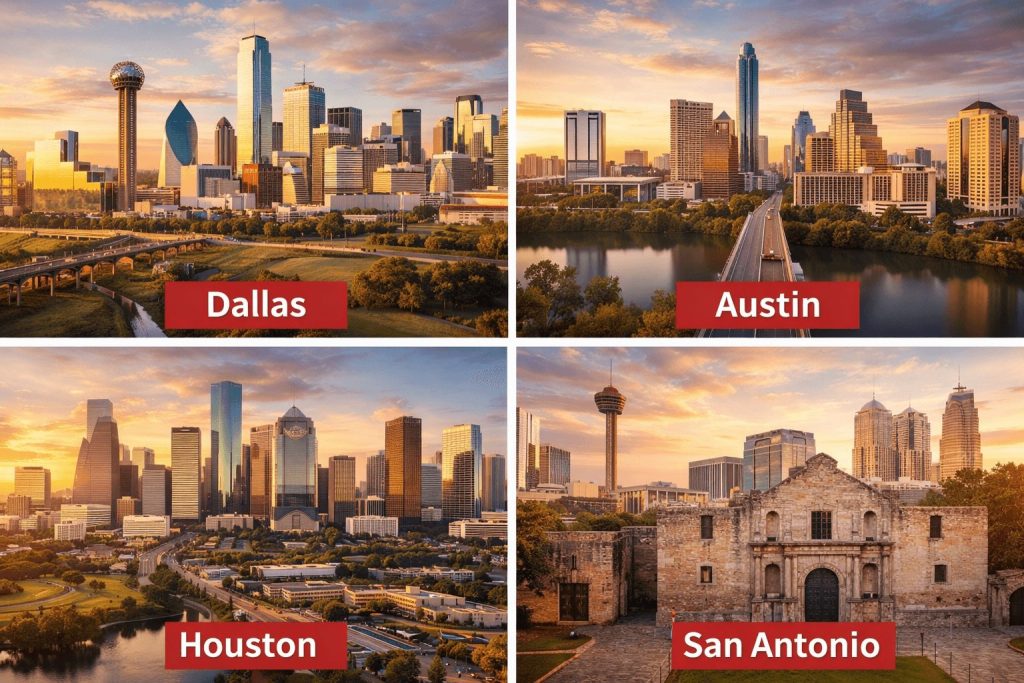
Dallas Fort Worth
Dallas Fort Worth remains one of the most stable and resilient housing markets in the state. Population growth continues, new construction remains active, and the region’s economic diversity helps smooth out volatility. In 2026, price growth is expected to be modest but consistent, particularly in suburban communities where buyers can still find relative affordability. Relocation buyers and move up households will continue to drive activity, especially in areas with strong schools and infrastructure.
Austin and Central Texas
Austin looks very different than it did a few years ago, and that is not a bad thing. Inventory has increased, competition has cooled, and buyers are once again taking time to evaluate options. This market is transitioning from frenzy to function. Sellers must price realistically, and buyers are more willing to negotiate. Neighborhood level performance will vary widely, making local knowledge critical. Agents who understand where real estate value still exists will be best positioned to succeed.
Houston
Houston continues to be one of the most balanced large metros in Texas. Its size, affordability relative to other major cities, and economic diversity keep demand steady even when certain sectors fluctuate. In 2026, Houston is expected to see stable pricing with slight upward pressure in select areas. Investors remain active, particularly in neighborhoods supported by employment centers and infrastructure improvements.
Inventory Is Changing the Conversation
One of the most important shifts heading into 2026 is inventory. Across many Texas markets, buyers have more choices than they have had in years. This does not mean homes are not selling. It means the market is rewarding preparation. Professional photography, accurate pricing, and thoughtful marketing are once again essential. Negotiation skills are back at the center of the transaction, and agents who can manage expectations on both sides will close more deals.
Buyers and Sellers Are Thinking Differently
Buyers are more cautious and more informed. They are asking questions, requesting inspections, and weighing long term affordability more carefully. Sellers, meanwhile, are learning that the market no longer does the work for them. Pricing too high often leads to longer days on market and eventual reductions. This shift creates opportunity for agents who can guide clients with clarity instead of hype.
Where Agents and Brokers Can Win in 2026
Education will be one of the most valuable tools in 2026. First time buyers need reassurance and explanation. Sellers need honest pricing guidance. Investors are watching closely for markets that offer stability rather than speculation. Agents who publish local market insights, explain trends clearly, and position themselves as advisors rather than promoters will build trust and long term business. Referral relationships across Texas will also become more important as buyers and sellers move between regions based on lifestyle and affordability.
The Bigger Picture
The Texas housing market in 2026 is not about extremes. It is about balance, strategy, and local expertise. For real estate professionals who adapt to this shift and lean into education, transparency, and market knowledge, the coming year offers real opportunity. Not just to close transactions, but to strengthen relationships and build sustainable businesses in a market that is finally behaving like a market again.