 Skip to content

After several years of rapid growth, intense competition, and soaring prices, the Texas housing market is entering 2026 in a noticeably different position. A fast-paced seller’s market that once defined cities like Austin, Dallas, Houston, and San Antonio is giving way to a more balanced, and in some areas, buyer-friendly environment.
Early indicators from late 2025 and early 2026 show slower sales, rising inventory, and softening price trends across much of the state. While Texas remains one of the strongest real estate markets in the country in the long term, the current shift is forcing buyers, sellers, and real estate professionals to adjust their expectations and strategies.
Here is a closer look at what is happening in the Texas housing market as 2026 begins and what it means for the future.
Home Sales Lose Momentum Across Texas
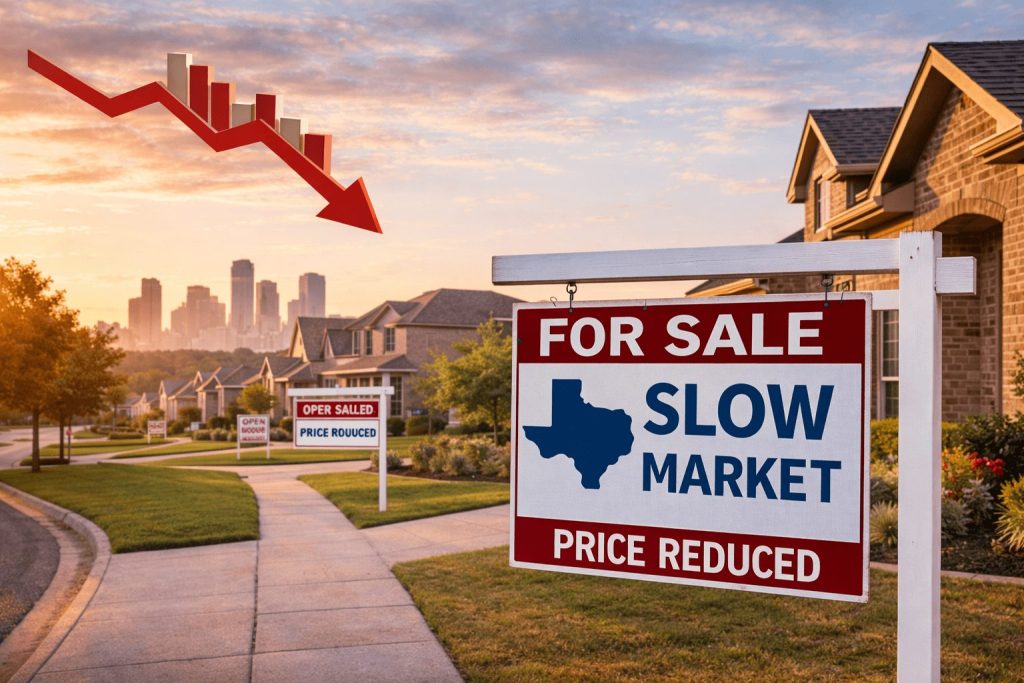
One of the clearest signs of market cooling is the slowdown in home sales activity. After years of double-digit growth during the pandemic boom, transaction volume has steadily declined.
By late 2025, statewide home sales were posting year-over-year declines, continuing into early 2026. Many markets saw fewer buyers enter the real estate market, leading to slower absorption of available inventory.
Several factors are driving this trend:
- Higher mortgage rates compared to the ultra-low levels of previous years
- Affordability challenges in major metro areas
- Economic uncertainty is affecting buyer confidence
- Reduced investor activity in some regions
While sales are not collapsing, the pace is clearly more measured. Buyers are taking longer to make decisions, and bidding wars have become far less common than they were just a few years ago.
This shift marks a return to more normal market conditions after an unusually aggressive growth cycle.
Inventory Levels Continue to Rise
Another major development is the increase in available homes for sale. Throughout 2025, inventory gradually climbed, and that trend has carried into 2026.
In many Texas markets, the supply of homes now sits above what is considered a “tight” seller’s market. Instead of having just a few weeks of inventory, many areas are approaching five or more months of supply.
Rising inventory is the result of several overlapping trends:
- More homeowners are listing properties after holding off during uncertainty
- New construction projects coming online
- Slower buyer demand
- Reduced speculative purchases
Homes are also staying on the market longer. Properties that once sold in days now often take weeks or months to find buyers. This gives buyers more time to compare options and negotiate terms.
For sellers, it means pricing and presentation matter more than ever.
Price Growth Slows and Softens in Some Cities
Texas home prices are no longer rising at the explosive pace seen in the early 2020s. In fact, several major metro areas have experienced modest year-over-year declines.
While the statewide median price remains relatively stable, localized markets tell a more nuanced story. Cities that saw the fastest appreciation during the boom are now feeling the most pressure.
In places like Austin and parts of Dallas-Fort Worth, prices have adjusted downward slightly as sellers compete for fewer buyers. San Antonio and Houston have also seen slower appreciation, with some neighborhoods showing flat or declining values.
This does not signal a housing crash. Instead, it reflects a market correcting from unsustainable growth.
Buyers are becoming more price-sensitive, and sellers who overprice their homes are often forced to reduce their asking prices.
New Listings Reflect Shifting Seller Behavior
Listing activity also reveals how the market is changing. After a surge in new listings throughout much of 2025, many sellers entered 2026 more cautiously.
Some homeowners are hesitant to sell if they have low mortgage rates locked in from previous years. Others are waiting to see how prices perform before committing to a move.
At the same time, Texas still recorded a historically high number of listings in recent years, contributing to elevated supply.
This mixed behavior suggests sellers are becoming more strategic. Instead of rushing to market, many are carefully watching trends and adjusting timing accordingly.
Mortgage Rates Remain a Key Market Driver
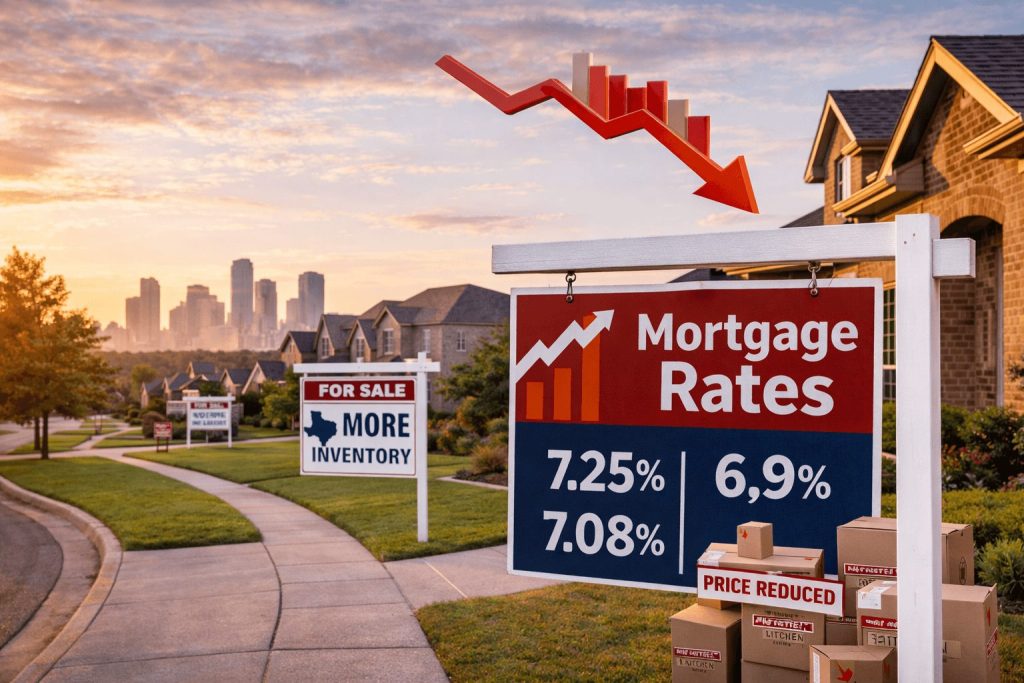
Mortgage rates continue to play a central role in shaping housing demand. While rates have stabilized somewhat compared to earlier volatility, they remain significantly higher than pre-2022 levels.
For many buyers, higher monthly payments have reduced purchasing power. Homes that once fit comfortably within budgets may now feel out of reach.
This has led to:
- More buyers are downsizing their expectations
- Increased interest in smaller homes and suburban areas
- Greater focus on financing incentives and rate buydowns
- Longer decision timelines
If rates decline meaningfully later in 2026, buyer activity could rebound. If they remain elevated, slower conditions may persist.
Either way, financing remains one of the most important variables in the Texas housing outlook.
Regional Differences Matter More Than Ever
While statewide trends point to cooling, Texas is far from uniform. Each metro area and even individual neighborhoods are experiencing different conditions.
Some suburban markets near major employment centers remain competitive. Areas with strong job growth and infrastructure investment are holding up better than others.
Meanwhile, locations that saw rapid investor activity or speculative building are more vulnerable to price pressure.
This growing regional divide means buyers and sellers can no longer rely solely on statewide headlines. Local data and neighborhood trends matter more than ever.
What This Means for Buyers in 2026
For buyers, the current environment offers more opportunities than in recent years.
Key advantages include:
- More homes to choose from
- Less competition
- Greater negotiating power
- Increased likelihood of seller concessions
- More time to inspect and evaluate properties
Buyers who were previously priced out of certain markets may now find better options. However, affordability remains a concern, especially with interest rates still elevated.
Smart buyers in 2026 are focusing on:
- Locking in competitive financing
- Comparing multiple properties
- Negotiating repairs and credits
- Evaluating long-term value instead of short-term trends
Patience and preparation are becoming valuable tools again.
What Sellers Need to Understand Right Now
Sellers in Texas can still succeed in 2026, but the approach must be different from past years.
Today’s market rewards realism, preparation, and strong marketing.
Successful sellers are:
- Pricing homes accurately from the start
- Investing in professional photography and staging
- Making necessary repairs upfront
- Being flexible with terms
- Responding quickly to market feedback
Overpriced homes often sit unsold, leading to price reductions that weaken negotiating positions.
Working with knowledgeable agents and understanding local conditions is critical in this more competitive environment.
Opportunities for Real Estate Professionals
For agents and brokers, a shifting market creates both challenges and opportunities.
While transaction volume may be lower, demand for skilled guidance is increasing. Clients need help navigating pricing, negotiations, and financing more than ever.
Top professionals in 2026 are focusing on:
- Market education for clients
- Data-driven pricing strategies
- Digital marketing and SEO visibility
- Strong buyer representation
- Creative deal structuring
Agents who adapt to changing conditions are well-positioned to build trust and long-term relationships.
Long-Term Outlook for Texas Real Estate
Despite short-term softness, Texas remains fundamentally strong.
Key long-term drivers include:
- Population growth
- Business relocation
- Job creation
- Infrastructure investment
- Relative affordability compared to coastal markets
These factors continue to support housing demand over time.
The current slowdown appears to be a recalibration rather than a collapse. After years of rapid expansion, the market is finding a more sustainable pace.
This normalization may ultimately lead to healthier conditions for buyers, sellers, and investors alike.
Final Thoughts: A More Balanced Texas Housing Market
As 2026 begins, the Texas housing market is entering a new phase. Sales have slowed, inventory has risen, and price growth has cooled in many areas. Buyers have more leverage, while sellers must compete more actively.
This shift represents a return to balance after years of extreme conditions.
For buyers, it is a chance to be selective and strategic. For sellers, it is a reminder that preparation and pricing matter. For real estate professionals, it is an opportunity to demonstrate expertise and leadership.
Texas real estate is not weakening so much as it is resetting. Those who understand this transition will be best positioned to succeed in the years ahead.